Best Airline-Approved Pet Carriers 2026
Airline approved is a phrase no airline actually issues, and understanding that is the whole of buying well in this category. There is no certification body and no approved list; each carrier sold this way is a manufacturer's claim that its dimensions fit under a typical seat, and every airline publishes its own maximums that differ by carrier and sometimes by aircraft. What the good carriers give you is a shape that compresses to fit a tight space without crushing the animal, ventilation on enough sides to survive a delayed cabin, and construction that a gate agent will not query. A few also carry independent crash-test certification, which is irrelevant in the air and the single most important specification in the car journey at either end. Holiday travel is when most people discover their carrier is wrong. These five are the ones worth flying with.
| Rank | Product | Score | Best for | Link |
|---|---|---|---|---|
| #1 | Sleepypod Air In-Cabin Pet CarrierTop pick | 10 | Frequent flyers, and anyone who wants the safest option in the car as well | Check price → |
| #2 | Sherpa Original Deluxe Travel Pet CarrierBest value | 9 | Most people flying with a cat or small dog once or twice a year | Check price → |
| #3 | Mr. Peanut's Gold Series Airline Compliant Expandable Pet Carrier V3.0 | 9 | Longer flights where an animal needs room to stretch out | Check price → |
| #4 | Petsfit Expandable Soft-Sided Airline Pet Carrier | 8 | Occasional flyers who want expansion without paying premium prices | Check price → |
| #5 | EliteField Soft-Sided Airline-Approved Pet CarrierBudget pick | 8 | A first carrier, or an occasional trip where spending more is hard to justify | Check price → |
#1 · Our PickTop pick
Sleepypod Air In-Cabin Pet Carrier
Best for: Frequent flyers, and anyone who wants the safest option in the car as well
What we like
- Compressible ends fold in for takeoff and extend to full length in the cabin
- Independently crash-tested and certified by the Center for Pet Safety
- Ventilation on multiple sides copes with a hot, delayed aircraft
- Build quality is in a different class from the rest of this list
- The extendable design gives the animal more room than the dimensions suggest
What we don't
- By far the most expensive carrier here
- Interior is narrower than the boxy expandable carriers
- Overkill if you fly once every few years
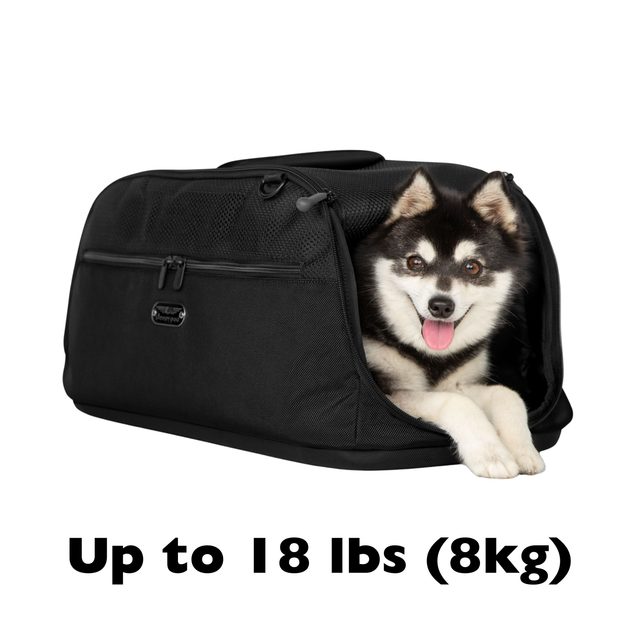
The Sleepypod Air solves the central tension of in-cabin travel with a genuinely clever piece of design. Under-seat space is tight and varies between aircraft, but a carrier sized to the tightest case is a miserable box for an animal to spend six hours in. The Air has compressible ends: they fold inward during takeoff and landing to meet the strict dimensions, and extend to the full 22 inch length for the rest of the flight and through the airport. The animal gets the room, the gate agent gets the compliance.
What lifts it above every rival, though, is what happens outside the aircraft. It is one of very few consumer pet carriers independently crash-tested and certified by the Center for Pet Safety, which is a real testing programme rather than a manufacturer's internal claim. Nearly every flight has a car journey at both ends, and in a collision an uncertified carrier on a seat is a projectile. If you are buying one carrier to do everything, this is the argument that settles it. Ventilation runs across several panels, which matters most in the situation everyone dreads, namely a full cabin sitting on the tarmac in summer with the air conditioning struggling.
The honest objections are cost and shape. It is the most expensive thing on this page by a considerable margin, and if you fly with a pet once every three years that is difficult to justify against a Sherpa at a third of the price. The interior is also narrower than the boxy expandable carriers, so a cat that wants to turn around freely may prefer one of those on the ground even though this one is better in every other respect.
The best carrier here and the only one whose crash certification is independently verified. Compresses for the seat, extends for the journey, built to last.
Check price on Amazon →#2Best value
Sherpa Original Deluxe Travel Pet Carrier
Best for: Most people flying with a cat or small dog once or twice a year
What we like
- Guaranteed On Board programme refunds the flight if the carrier causes a denied boarding
- Spring wire frame compresses under a seat without collapsing onto the pet
- The most widely recognised carrier at gates, so it attracts fewer questions
- Mesh panels on several sides for ventilation and visibility
- Considerably cheaper than the Sleepypod
What we don't
- No independent crash certification, so it is a travel bag rather than a car restraint
- Less durable than the Sleepypod over years of use
- Sizing is tight, and many owners need a size up from the weight chart
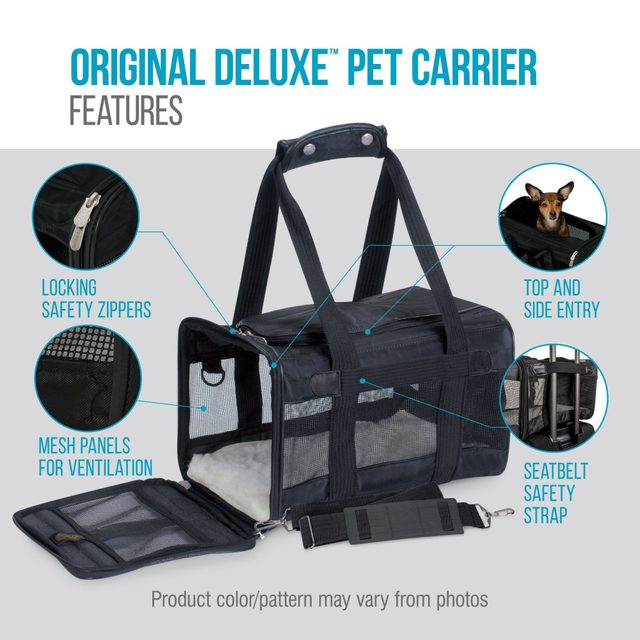
If the Sleepypod is the right answer with an unlimited budget, the Sherpa Original Deluxe is the right answer for most people. Its key structural idea is a spring wire frame along the top: pushed under a seat it flexes down to fit, and the moment the pressure comes off it springs back, so the carrier meets a tight height limit without the animal being squashed for the duration. That is the same problem the Sleepypod solves with folding ends, at a much lower price.
It also has the single most reassuring feature in this category, which is Sherpa's Guaranteed On Board programme. If you are denied boarding because of the carrier, Sherpa refunds the flight. That is a manufacturer putting money behind a compliance claim that everyone else simply asserts, and it is worth more than any specification. In practical terms it rarely gets invoked, partly because this is the carrier gate agents see most often and therefore query least. Mesh panels on several sides handle ventilation and let a nervous animal see you.
Two things to be clear about. It has no independent crash-test certification, so it is a carrier for travel rather than a restraint for the car, and it should not be treated as a safety device on a back seat. It is also sized tightly, and a great many owners find they need to go a size up from what the weight chart suggests, so measure the animal lying down with legs extended rather than trusting the pounds figure. Durability is good but not Sleepypod good.
The sensible default. The spring frame compresses without crushing, gate agents know it on sight, and Sherpa backs it with a genuine on-board guarantee.
Check price on Amazon →#3
Mr. Peanut's Gold Series Airline Compliant Expandable Pet Carrier V3.0
Best for: Longer flights where an animal needs room to stretch out
What we like
- Expands sideways once on board to nearly double the floor area
- Compliant dimensions when zipped closed for boarding and stowage
- Sturdier internal frame than most expandable carriers
- Good ventilation across the expanded panels
- Well-finished for the price, with quality zips and hardware
What we don't
- Expansion is only usable when there is room to deploy it, which is not every flight
- Heavier than a simple soft carrier
- No independent crash certification
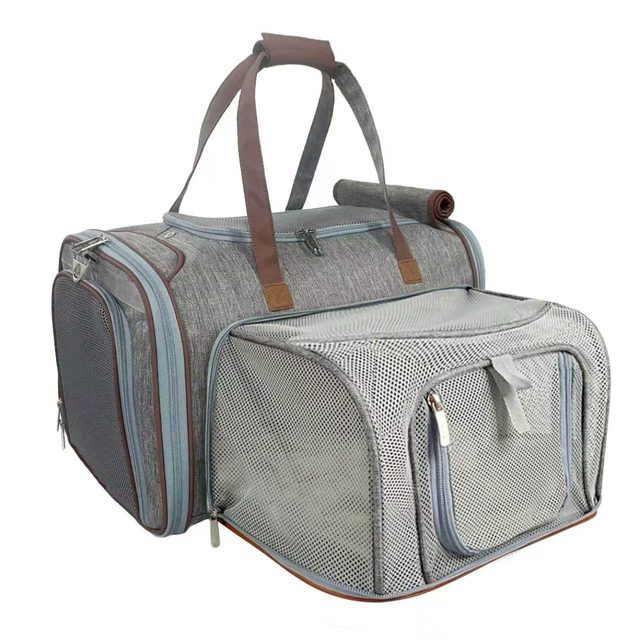
Expandable carriers are the obvious answer to the in-cabin problem and most of them are badly executed, with flimsy panels that sag into the animal and zips that fail in a season. The Mr. Peanut's Gold Series is the version built properly. Zipped closed it meets the dimensions that get it under a seat and past a gate agent; unzipped in the cabin, a side panel deploys to give close to double the floor area, which on a long flight is the difference between an animal that can lie out flat and one curled in a box for six hours.
The execution details are what make it work. The internal frame is stiffer than the competition, so the expanded section holds its shape rather than collapsing inward when the animal leans on it, and the zips and hardware are a noticeable step up from the generic expandable carriers at a similar price. Ventilation is good across the expanded panels, which matters because expansion adds volume that needs air moving through it.
The practical caveat is that the expansion is only sometimes usable. Under a seat in a full economy row there is frequently no lateral room to deploy it, so the feature you paid for is available in the airport, at the gate, in the hotel and on a half-empty flight, but not reliably in the air. It is also heavier than a plain soft carrier, which you notice across a large airport. And like everything except the Sleepypod, it has no independent crash testing, so it is not a car restraint.
The expandable option done properly. Compliant when closed, nearly double the floor area when open, with a frame that holds its shape.
Check price on Amazon →#4
Petsfit Expandable Soft-Sided Airline Pet Carrier
Best for: Occasional flyers who want expansion without paying premium prices
What we like
- Expandable design at a much lower price than the Mr. Peanut's
- Removable washable base and lining, which matters after an accident in transit
- Lightweight, so it is easy to carry through a long terminal
- Good ventilation and visibility on several panels
- Well proportioned for cats and small dogs
What we don't
- Frame is softer, so the expanded section sags more under weight
- Less durable hardware than the pricier expandables
- No independent crash certification
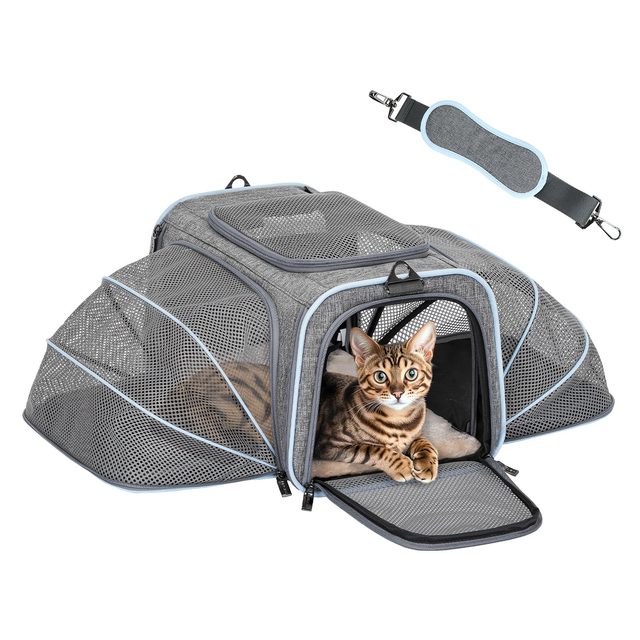
The Petsfit occupies a useful gap: it is an expandable carrier at a price much closer to a plain soft one, and for someone flying occasionally rather than monthly that trade lands well. Closed, it meets typical under-seat dimensions; opened, it gives the animal meaningfully more room in the terminal and the hotel room even when the aircraft itself does not allow deployment.
Its most underrated feature is the removable washable base and lining. Travel is stressful and accidents in carriers are common, and the difference between a carrier you can strip and machine wash and one you cannot is the difference between a recoverable situation and a ruined bag halfway through a trip. It is also light, which is worth more than it sounds when you are carrying an animal, a bag and a boarding pass across a large terminal, and the ventilation and visibility panels are well placed for a nervous cat that wants to see out.
The compromises are structural. The frame is softer than the Mr. Peanut's, so the expanded portion sags more under a leaning animal and feels less substantial, and the zips and hardware are lighter and are where wear shows first. It will not take the years of use the premium carriers will. As a carrier for a couple of trips a year, with the washable interior earning its keep, it is good value; as a weekly commuting carrier it will not last.
The affordable expandable. Most of the benefit of the Mr. Peanut's design for considerably less, with a softer frame and lighter hardware.
Check price on Amazon →#5Budget pick
EliteField Soft-Sided Airline-Approved Pet Carrier
Best for: A first carrier, or an occasional trip where spending more is hard to justify
What we like
- Cheapest carrier here that is genuinely fit for flying
- Three-year warranty, which is unusual at this price
- Removable fleece bed and cover, both washable
- Mesh on three sides plus multiple entry points
- Wide range of sizes, including options for larger cats
What we don't
- Structure is simpler, so it flattens more under a tight seat
- Fabric and zips are the first things to show wear
- No independent crash certification
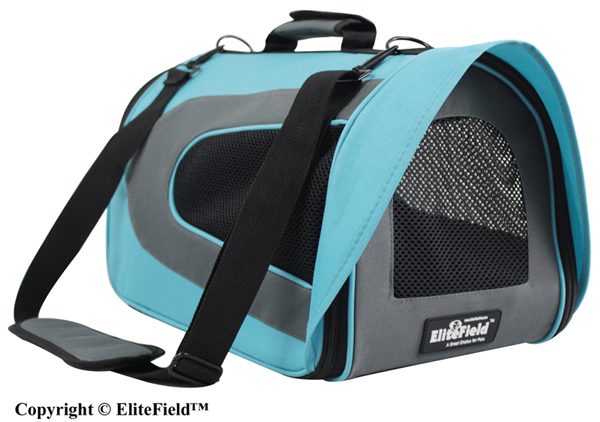
Most cheap pet carriers are cheap in the ways that matter, with two mesh windows, no structure and a zip that fails at the airport. The EliteField is the exception at this price, and the giveaway is the three-year warranty, which is not something a manufacturer offers on a product it expects to fall apart.
The specification covers the real requirements. There is mesh on three sides, which is enough ventilation for a delayed cabin and enough visibility for an anxious animal, and multiple entry points, which matters more than it sounds because getting a reluctant cat into a carrier through a single small opening is a fight you will lose in an airport. The fleece bed and the cover both come out and go in the machine. The size range is broad and includes options that suit large cats, a group the mainstream brands fit poorly.
What you give up is structure and longevity. There is less internal framing than the carriers above, so under a tight seat it compresses more and gives the animal less protected space, and the fabric and zips are where wear appears after a couple of seasons of use. It has no crash certification and should not be used as a car restraint. For a first carrier, an occasional trip, or a second carrier for a multi-pet household, it does the job honestly for the money.
The budget pick that is still a real carrier. Three-year warranty, washable bedding and proper ventilation, with less structure than the pricier options.
Check price on Amazon →Airline approved is a marketing phrase, not a certification
There is no approving body. No airline certifies carriers, no regulator publishes a list, and the phrase on the packaging means only that a manufacturer believes its product will fit under a typical seat. What actually governs whether you board is your airline’s own published maximum under-seat dimensions, which vary between airlines, sometimes between aircraft in the same fleet, and which the gate agent is working from. Look those up before buying rather than discovering them at the gate, and check the surrounding rules at the same time, because weight limits, breed restrictions and a cap on animals per cabin are all common and none of them are properties of the carrier you buy.
The good ones fit a tight space without being a tight space
The design problem is that a carrier sized down to the strictest under-seat limit is a cramped box for an animal to spend six hours in, and a carrier sized for comfort will not stow. Every good carrier here solves that by changing shape rather than picking a side: a spring wire frame that flexes down under the seat and returns the moment the pressure comes off, folding ends that compress for takeoff and extend for the cruise, or a panel that expands sideways once you are settled. What you are paying for above the cheap carriers is that mechanism, plus a frame stiff enough that the expanded space does not simply sag back onto the animal.
The dangerous part of the trip is the car
Cabin travel is, in safety terms, uneventful. The drive to the airport and the drive from the airport at the other end are where an animal is genuinely at risk, and an unrestrained or uncertified carrier on a back seat is a heavy object that keeps moving when the car stops. Independent crash-test certification from the Center for Pet Safety is the only evidence that a carrier has been tested for that, it applies to a very small number of products, and manufacturers’ own claims of crash testing are not the same thing. If one carrier has to serve for both flying and driving, this is the specification worth paying for, even though it makes no difference at all in the air.
A nervous traveller is a separate problem from a well-chosen carrier. Pair this with our calming products guide for the animal that finds the whole business distressing.
Frequently asked questions
Is there really no such thing as an airline-approved carrier?
Correct. No airline certifies carriers and no independent body issues approval for cabin travel, so the phrase on a product listing is entirely a manufacturer's claim that its dimensions will fit under a typical seat. Airlines each publish their own maximum under-seat dimensions, these differ between carriers and sometimes between aircraft on the same airline, and the published figures are what a gate agent works from. Always check your specific airline and aircraft before booking, and expect the rules to include weight limits, breed restrictions and a cap on how many animals are permitted in the cabin per flight.
What size carrier do I need?
Measure the animal rather than working from a weight chart, because two cats of the same weight can be very different shapes. Take length from nose to base of tail while the animal is lying down with its legs extended, and height at the shoulder while standing. The requirement almost every airline applies is that the pet can stand up, turn around and lie down naturally inside the carrier. Then check that against your airline's maximum under-seat dimensions, and if the animal needs more space than the airline allows, it does not fly in the cabin. Many owners find they need a size up from what the manufacturer's weight guidance suggests.
Does a crash-tested carrier matter if I am flying?
It matters for the car journeys at each end, which is where the actual collision risk lives. An uncertified carrier sitting on a back seat becomes a heavy projectile in a crash, dangerous to the animal inside it and to the people in the vehicle. Independent certification from the Center for Pet Safety involves real crash testing rather than a manufacturer's own claim, and very few carriers on the market hold it. If you are buying a single carrier to serve for both flying and driving, this is the specification that should decide it, since nothing about it is relevant in the air but everything about it matters on the road.
How do I keep a cat calm in a carrier on a flight?
Preparation does more than anything you can do on the day. Leave the carrier out at home for weeks beforehand with bedding and treats inside so it becomes an ordinary piece of furniture rather than a thing that appears before something frightening happens. Feed the cat in it. On the day, put in bedding that already smells of home, and consider covering part of the carrier so the cat can hide while keeping ventilation clear. Do not sedate an animal for a flight without veterinary advice, since sedatives affect breathing and temperature regulation at altitude and most vets advise against them.