Best Heated Pet Beds and Outdoor Cat Houses 2026
An arthritic cat or a thin-coated senior dog feels a cold room in its joints, and a barn or feral cat facing a sub-zero night needs warmth to survive it rather than merely enjoy it. A heated pet bed answers both, and unlike most pet gear it is an electrical appliance a pet lies on top of and chews the cord of, which makes safety certification the first thing to check rather than a footnote. The good ones use a thermostatically controlled low-wattage element that warms to roughly body temperature only when the animal is on it, sitting 10 to 15 degrees above room temperature the rest of the time; the bad ones are unregulated heat mats sold cheaply. This list leans heavily on one brand for a reason: K&H certifies the whole product rather than the components. These five cover indoors, outdoors and no mains at all.
| Rank | Product | Score | Best for | Link |
|---|---|---|---|---|
| #1 | K&H Thermo-Kitty Bed Heated Cat Bed (16-inch Round)Top pick | 10 | Cats and small dogs indoors, particularly older ones with stiff joints | Check price → |
| #2 | K&H Thermo-Kitty Mat Heated Pet Pad (12.5 x 25 inch)Best value | 9 | Adding warmth to a crate, carrier or a bed the pet already likes | Check price → |
| #3 | K&H Heated Outdoor Cat House with Two Doors | 9 | Feral, stray and barn cats that need to get through winter outdoors | Check price → |
| #4 | K&H Lectro-Soft Outdoor Heated Pet Bed | 9 | Kennels, garages, barns and porches where a dog sleeps in the cold | Check price → |
| #5 | Furhaven ThermaNAP Self-Warming Pet MatBudget pick | 8 | Crates, carriers and cars, or any spot where a cord is not an option | Check price → |
#1 · Our PickTop pick
K&H Thermo-Kitty Bed Heated Cat Bed (16-inch Round)
Best for: Cats and small dogs indoors, particularly older ones with stiff joints
What we like
- Thermostatic 4-watt heater warms only when the pet is on it
- Heater lifts out, so the bed works unheated in summer
- MET safety listed as a complete product, not just the element
- Bolstered pillow shape that cats settle into readily
- Cover machine washes with the heater removed
What we don't
- 16 inches suits a cat or small dog, not a labrador
- Warmth is subtle by design and can seem underwhelming at first
- Cord needs routing out of a determined chewer's reach
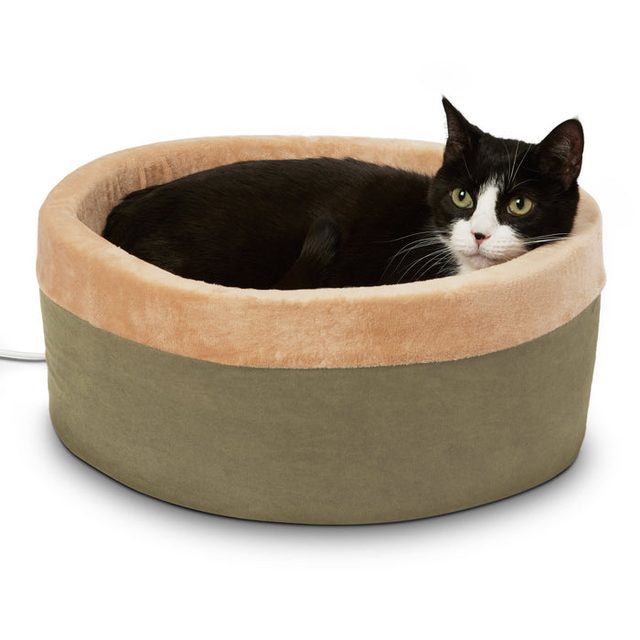
The Thermo-Kitty is the sensible default for an indoor cat or a small senior dog. Its heater is a 4-watt thermostatically controlled element buried under foam, and the behaviour is the point: it sits around 10 to 15 degrees above room temperature when empty and only warms fully once an animal settles on it, which is both cheap to run and safer than a mat that simply heats whatever is on top of it. For a cat with stiff hips, that gentle constant warmth is what gets it sleeping in a bed instead of pressed against a radiator.
The design decisions around the heater are what lift it above the alternatives. The element lifts out entirely, so the same bed carries on as an ordinary bolstered bed through summer rather than being stored for half the year, and with the heater out the cover goes in the washing machine. The bolstered pillow shape gives a cat a raised edge to tuck against, which is the shape cats actually choose. It is MET safety listed as a finished product, meaning the whole bed was tested rather than a certified element being dropped into an uncertified assembly, and that distinction is the main reason to buy this category from a known brand.
The honest notes are size and expectation. At 16 inches round it fits a cat or a genuinely small dog, and you want the 20-inch version for anything larger. The warmth is also deliberately gentle, so an owner expecting a hot-water-bottle feel will put a hand on it and assume it is broken; it is meant to be barely warm to you and pleasant to a cat lying still on it for hours. Get past that and it is the best indoor heated bed here.
The heated bed we rank first. Proper thermostatic control, a heater you can take out for summer, and whole-product safety certification.
Check price on Amazon →#2Best value
K&H Thermo-Kitty Mat Heated Pet Pad (12.5 x 25 inch)
Best for: Adding warmth to a crate, carrier or a bed the pet already likes
What we like
- Flat mat drops into a crate, carrier, window seat or existing bed
- Same dual-thermostat control as the pricier beds
- Waterproof construction wipes clean easily
- Cheapest genuine thermostatic option here
- Machine washable cover over the heated core
What we don't
- No bolster or raised edge for a cat to curl against
- Rectangular shape suits a crate better than open floor
- Needs an existing bed if you want real cushioning
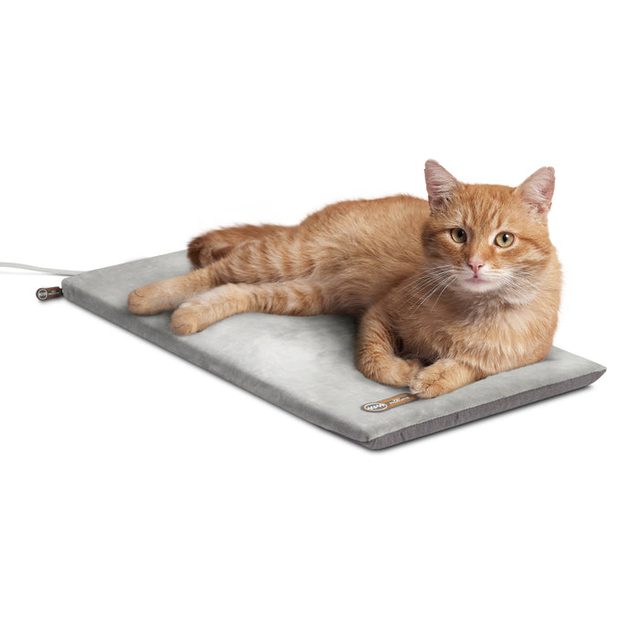
Most pets already have a favourite spot, and the fight to move them into a new heated bed is one you will lose. The Thermo-Kitty Mat sidesteps it: a flat thermostatically controlled pad that goes into the crate, the carrier, the window seat or under the blanket in the bed they already use. That makes it the most useful product here for anyone whose animal is set in its ways.
It uses the same dual-thermostat approach as the more expensive beds, warming to roughly body temperature under an occupant and idling 10 to 15 degrees above ambient otherwise, at a wattage low enough to leave running all winter. The construction is waterproof, which matters more than it sounds for an older pet or a crate-trained dog, since a mat that can be wiped down survives accidents that would ruin a fabric bed, and the cover comes off for the machine.
What you give up is shape. There is no bolster, so a cat that wants to curl against a raised edge gets nothing here, and the rectangle looks purposeless sitting on an open floor in a way a round bed does not. It is also thin, so it warms rather than cushions and wants a bed or a folded blanket under it for an arthritic animal. Used as an upgrade to bedding that already exists, it is the cleverest money on this page.
The value pick. The same thermostatic warmth as the full beds in a flat pad that upgrades whatever bed your pet already refuses to leave.
Check price on Amazon →#3
K&H Heated Outdoor Cat House with Two Doors
Best for: Feral, stray and barn cats that need to get through winter outdoors
What we like
- Insulated, weather-resistant shell built for sub-zero nights
- Two exits so a cat cannot be cornered by a predator
- Removable safety-listed heated bed inside
- Roof overhangs both doors to keep driving rain out
- Assembles with hook-and-loop walls, no tools needed
What we don't
- Fabric shell is less durable long-term than a rigid shelter
- Needs a safe outdoor power route to reach it
- One or two cats only, despite looking roomier
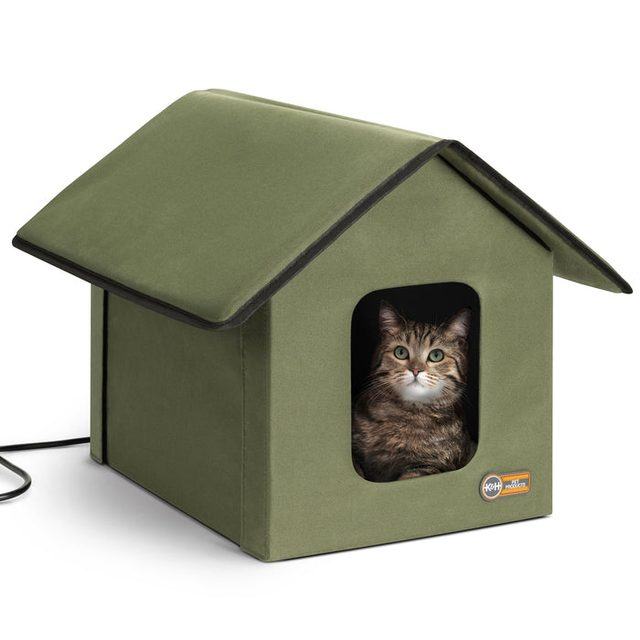
For a colony cat or a barn cat, this is not a comfort purchase. An unheated shelter in genuinely cold weather keeps the wind off but not much more, and the difference a thermostatically controlled bed makes on a sub-zero night is the difference that matters. This house pairs an insulated, weather-resistant shell with a removable safety-listed heated bed, and the combination is what gets an outdoor cat through a hard winter.
The detail that shows someone thought about outdoor cats is the second door. A shelter with one entrance is a trap, and cats know it, which is why many refuse to use single-door boxes in areas with dogs or foxes; two exits mean a cat can always leave the way the threat is not. The clear flaps keep weather out while staying passable, the roof overhangs both openings so driving rain does not run in, and the walls fasten with hook-and-loop so it assembles in minutes without tools.
The considerations are durability and power. A fabric shell will not last as many seasons outdoors as a rigid plastic shelter, so treat it as a multi-winter rather than a decade-long purchase, and you need a safe route for mains power, which in practice means an outdoor-rated extension and a covered connection. Despite the internal volume it realistically serves one or two cats. Within that, it is the most humane thing here.
The outdoor pick. An insulated shelter with two escape doors and a certified heated bed inside, which is what actually keeps an outdoor cat alive in hard weather.
Check price on Amazon →#4
K&H Lectro-Soft Outdoor Heated Pet Bed
Best for: Kennels, garages, barns and porches where a dog sleeps in the cold
What we like
- Soft and flexible rather than a rigid heated board
- Thermostat holds about 102°F under an occupant
- Soft PVC shell shrugs off water, mud and washing down
- Very low wattage for continuous winter running
- MET certified beyond baseline electrical requirements
What we don't
- Explicitly not for destructive dogs, as the shell can be chewed through
- Cord requires protecting in a kennel or barn
- Cover is an extra to replace once worn
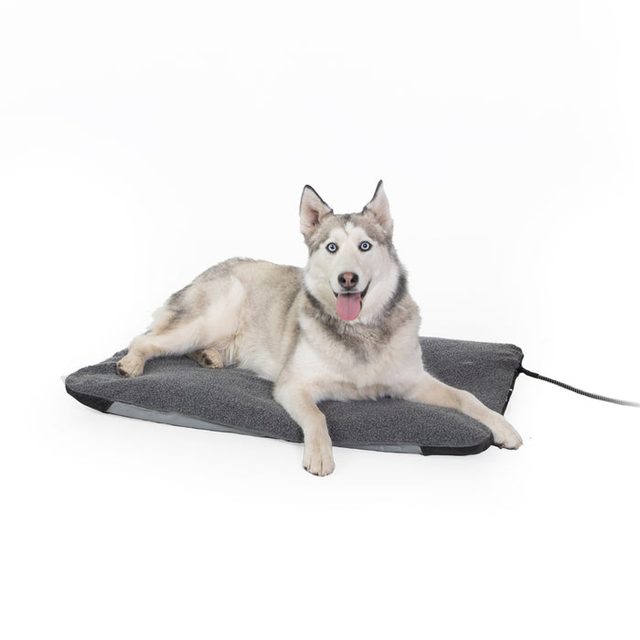
Outdoor heated pads have historically been rigid plastic slabs, warm but unpleasant to lie on, which is a poor answer for the older dog most likely to need one. The Lectro-Soft is the soft alternative: a flexible, orthopedic-feeling pad that carries an internal thermostat holding roughly 102°F once a dog settles on it and idling well above ambient when empty, so a kennel, garage or porch stays usable through a cold snap.
It is built for the environment it lives in. The shell is a soft PVC that water, mud and hosing off do not trouble, and it comes with a removable washable cover, which is what makes it practical in a barn rather than merely rated for one. The wattage is low enough to leave connected all winter without a noticeable bill, and like the rest of the range it is MET tested to standards beyond the electrical baseline, which is the assurance you want on something running unattended outdoors in the wet.
The warnings are worth taking literally. K&H states plainly that it is not for destructive dogs, and a dog that chews will get through a soft PVC shell to a live element, so this is for a settled adult dog and not a bored young one. The cord needs protecting where it enters a kennel, and the cover is a consumable you will replace eventually. For a dog that genuinely sleeps in the cold, it is the right kind of heated bed.
The kennel pick. A genuinely soft outdoor heated bed rated for sub-zero conditions, where most outdoor pads are hard boards.
Check price on Amazon →#5Budget pick
Furhaven ThermaNAP Self-Warming Pet Mat
Best for: Crates, carriers and cars, or any spot where a cord is not an option
What we like
- No electricity at all, so no cord and no safety question
- Reflective thermal layer returns the pet's own body heat
- Goes anywhere: crate, carrier, car, window seat
- Fully machine washable with nothing to remove first
- The cheapest option here by a wide margin
What we don't
- Only retains heat, so it cannot warm a genuinely cold space
- Plush faux fur collects shed hair
- Thin, so it warms without cushioning
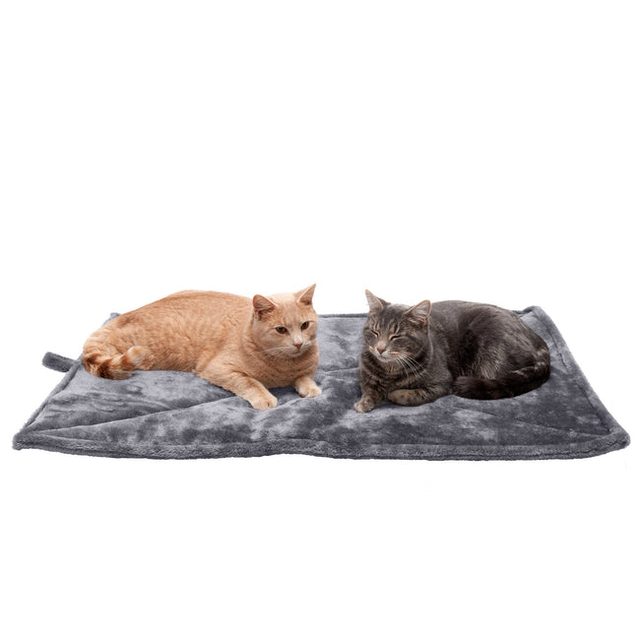
Not every cold spot has a socket, and not every owner wants a cable within reach of a puppy. The ThermaNAP takes the electricity out of the equation: a reflective thermal sheet sandwiched between layers of fibre batting, which returns the animal's own radiated heat rather than generating any. In a carrier, a crate, a car or a window seat, that is often exactly the right amount of intervention.
Its practical advantage is that it goes anywhere and needs nothing. There is no cord to route, no element to remove before washing, and no safety certification to think about, so the whole mat simply goes in the machine when it gets grubby and comes out ready. That makes it the easiest product here to own, and cheap enough to buy several and put one in every spot your cat rotates between during the day.
Be clear about the physics, though. It retains heat, it does not produce it, so in a genuinely cold garage or on a sub-zero porch it will do very little; its value is in a cool room, not a cold one. The plush faux fur surface holds shed hair until vacuumed, and it is thin, so an arthritic animal wants it on top of a proper bed rather than on a hard floor. As a cheap, safe, portable way to make a cool spot warmer, it does the job well.
The budget pick. A reflective layer that returns your pet's own warmth, which is the right answer wherever mains power is impractical.
Check price on Amazon →Thermostatic control is the whole safety story
The difference between a heated pet bed and a heat mat is a thermostat, and it matters twice over. A properly controlled bed warms to roughly body temperature only once an animal is on it, and idles 10 to 15 degrees above the room the rest of the time, drawing a handful of watts. An unregulated mat just heats, continuously, whatever is on top of it, which is a genuine burn risk for precisely the animal most likely to be using it: an old or unwell pet that cannot easily get up and move away. Buy on the safety listing too, and read it carefully. A certified heating element fitted inside an uncertified assembly is not the same as a bed that was tested as a finished product, and the cheap end of this market trades on that distinction.
It is supposed to feel barely warm
The commonest complaint about these beds is that they seem not to work, and it is almost always a measurement error. You are putting a hand on the surface for a few seconds; the bed is designed for an animal lying motionless on it for six hours. Empty, it is only slightly above room temperature by design, and it warms properly once weight and body heat are present. A heated pet bed that felt hot to your palm would be the one to worry about. If you want to check it, leave a folded towel on it for twenty minutes and feel underneath.
Outdoors, the shelter matters as much as the heat
For a barn, stray or feral cat, warmth is only half the problem. An insulated shell keeps the heat where it is useful, and the roof needs to overhang the entrance so driving rain does not run inside. The detail owners overlook is the second door: a shelter with one opening is a dead end, and cats in areas with dogs or foxes will often refuse to use one, however warm it is. Two exits mean a cat can always leave by the route the threat is not on. Add an outdoor-rated heated bed inside, a safe power route with a connection that stays dry, and protection where the cord enters, and you have something that genuinely gets a cat through a hard winter.
Warmth helps a stiff older animal, and so does what it is lying on. Pair this with our orthopedic dog beds guide to get both the support and the heat right.
Frequently asked questions
Are heated pet beds safe to leave on all the time?
A properly certified thermostatic bed is designed for exactly that, and leaving it connected is how it is meant to be used. The element runs at a few watts, warms only to around body temperature under an occupant, and idles slightly above room temperature otherwise, so there is no build-up of heat when the pet leaves. What is not safe is an unregulated heat mat with no thermostat, or any heated bed whose cord a pet can chew, or a certified element inside an uncertified assembly. Check for a safety listing covering the whole product, route the cable out of reach, and inspect the cord occasionally for damage.
Mine feels barely warm. Is it faulty?
Almost certainly not. These beds are deliberately calibrated to an animal lying still on them for hours, which needs far less heat than a hand pressed briefly on the surface registers as warm. Empty, the surface sits only 10 to 15 degrees above room temperature, and it warms fully only once weight and body heat are on it, so testing it with your palm for a few seconds gives a misleading impression. If you want to confirm it is working, leave a folded towel over it for twenty minutes and feel underneath. A bed hot to the touch would be the actual problem.
Which pets actually benefit from a heated bed?
Older animals with stiff or arthritic joints get the clearest benefit, since gentle constant warmth eases the joints and, just as usefully, stops them seeking out radiators and other genuinely hot surfaces. Thin-coated and small breeds, cats recovering from illness or surgery, and any animal sleeping in an unheated space are next. Outdoors it stops being about comfort: for a barn, stray or feral cat, a heated bed inside an insulated shelter is a survival measure in sub-zero weather. Healthy young pets in a warm house do not need one.
Can I use one in an outdoor cat house or kennel?
Only with a product rated for it. Indoor beds are not built for damp, and putting one in a kennel or shelter risks both the bed and the animal. Outdoor-rated models like the Lectro-Soft use a sealed soft PVC shell that tolerates water, mud and hosing down, and the purpose-built heated cat houses come with a suitable bed already inside. You also need to solve the power route properly, with an outdoor-rated extension and a connection that stays dry, and protect the cord where it enters the shelter. Do not use an outdoor heated bed with a dog that chews.