Best Reptile Heat & UVB Lamps 2026
Reptiles rely on their environment for body temperature, and many commonly kept species also require appropriate UVB exposure for normal vitamin D and calcium metabolism. Heat, UVB strength, distance, enclosure size and control method are species-specific, so no bulb is universally safe or complete. We compared combo kits, dedicated UVB lamps and mercury-vapor bulbs using manufacturer specifications, product documentation, established reptile-husbandry guidance, and recurring owner feedback. Verify the requirements of your exact species and enclosure before choosing a lamp.
| Rank | Product | Score | Best for | Link |
|---|---|---|---|---|
| #1 | Zoo Med Heat & UVB Combo Pack 100WTop pick | 10 | New keepers comparing a packaged heat-and-UVB pair after confirming species requirements | Check price → |
| #2 | Zoo Med ReptiSun 5.0 Mini Compact UVBBest value | 9 | Setups where species-specific guidance and mounting distance match this compact lamp’s output | Check price → |
| #3 | REPTI ZOO 160W Mercury Vapor UVA/UVB Lamp | 9 | Larger enclosures that can safely accommodate this lamp’s heat and UVB output | Check price → |
| #4 | Zoo Med Repti Basking Spot Lamp 50W | 8 | Adding a focused basking zone where species-specific temperature targets support this wattage | Check price → |
| #5 | REPTI ZOO 100W Self-Ballasted Mercury Vapor LampBudget pick | 8 | Enclosures where this lamp’s heat, UVB and mounting requirements match the species-specific targets | Check price → |
#1 · Our PickTop pick
Zoo Med Heat & UVB Combo Pack 100W
Best for: New keepers comparing a packaged heat-and-UVB pair after confirming species requirements
What we like
- Covers heat and UVB categories in one box
- Pairs a basking spot bulb with a ReptiSun UVB lamp
- Two-lamp package from an established reptile-lighting brand
- Bundles the two lamp types a compatible setup may require
- Good value versus buying both separately
What we don't
- Needs two fixtures to run both bulbs
- UVB bulb must be replaced on the manufacturer’s schedule
- 100W may be inappropriate for some enclosures
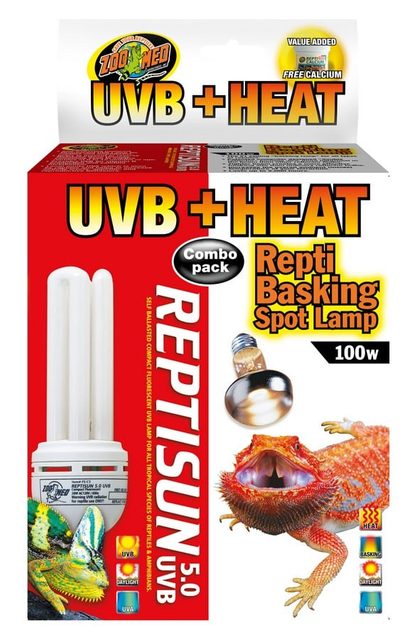
A common setup error is assuming that a warm, bright enclosure automatically provides the UVB exposure a species requires. This combo pack puts a basking lamp and a UVB lamp in the same package, but the keeper still has to confirm that both are appropriate for the animal and enclosure.
This pack supplies both categories of lamp in one box: a basking bulb to raise temperature and a ReptiSun UVB lamp. The convenience is that both categories are supplied together, but that does not make the wattage or UVB output automatically correct for every reptile. Suitability still depends on species, enclosure size, mounting distance, mesh and the measured temperatures in the basking and cool zones.
You still need two suitable fixtures to run both bulbs, and the UVB lamp has to be replaced according to the manufacturer’s schedule even if it continues to emit visible light. The 100W heat lamp may also be inappropriate for some enclosures, so verify mounting limits and measured temperatures rather than relying on wattage alone. For a new keeper who has checked the key species and enclosure specifications, this is a convenient starting package when its specifications match the setup.
A convenient two-lamp package that includes heat and UVB components; suitability still depends on the species, enclosure, mounting distance and measured output.
Check price on Amazon →#2Best value
Zoo Med ReptiSun 5.0 Mini Compact UVB
Best for: Setups where species-specific guidance and mounting distance match this compact lamp’s output
What we like
- Self-ballasted, screws into a standard fixture
- Compact UVB format for setups where its measured output fits the target
- Provides UVB from a compact, self-ballasted lamp
- Compact size fits smaller hoods and enclosures
- Inexpensive and easy to replace on schedule
What we don't
- Provides UVB only, no meaningful heat
- Output must be checked against the exact species and mounting distance
- Compact UVB covers a smaller area than a tube
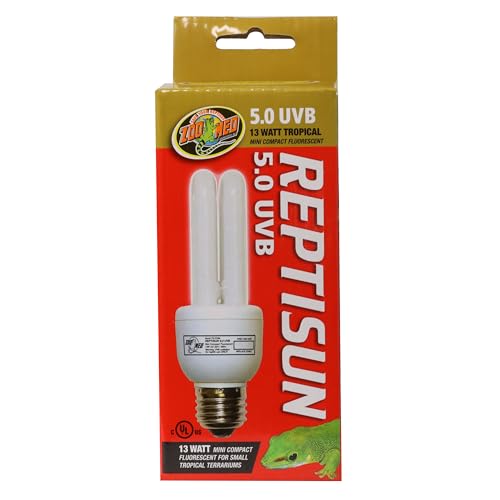
UVB exposure is invisible, so it has to be selected and verified deliberately for species that require it.
The ReptiSun 5.0 Mini is a compact self-ballasted lamp that screws into a compatible fixture and provides UVB in a small format. Whether that output is appropriate depends on the reptile, exposure distance, enclosure and any mesh or screening between the lamp and animal. Its compact size can fit hoods and enclosures where a long fluorescent tube will not.
Do not treat “5.0” versus “10.0” as a universal forest-versus-desert rule. UVB requirements vary by species and setup, and the usable exposure at the animal depends on distance, reflector, mesh and lamp geometry as well as the number printed on the box. It provides no meaningful heat, so the enclosure’s thermal requirements still need to be met separately, and being a compact lamp it lights a smaller footprint than a full tube.
An affordable compact UVB source for setups where the lamp’s measured output, distance and coverage match the animal’s species-specific target.
Check price on Amazon →#3
REPTI ZOO 160W Mercury Vapor UVA/UVB Lamp
Best for: Larger enclosures that can safely accommodate this lamp’s heat and UVB output
What we like
- All-in-one: heat, UVA and UVB from a single bulb
- Self-ballasted single-bulb format
- High-output 160W all-in-one format
- Only one fixture to mount and wire
- Single-lamp heat-and-UVB format
What we don't
- High output can overheat unsuitable enclosures
- Control compatibility must follow the manufacturer’s instructions
- Heavier bulb needs a suitable heat-rated fixture
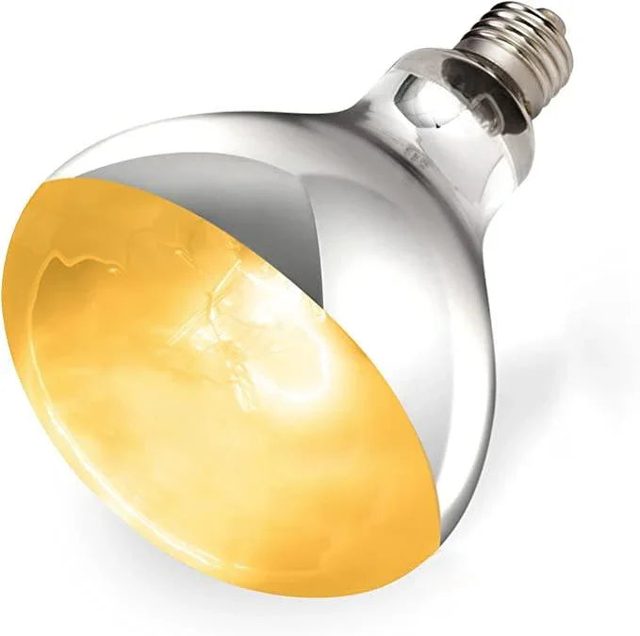
This REPTI ZOO mercury-vapor lamp combines heat, UVA and UVB in one self-ballasted bulb. Whether that format is suitable depends on the species, enclosure, mounting distance and control requirements.
The consolidation is the main draw: one fixture and one bulb instead of separate heat and UVB lamps. The output is high, so suitability depends on the exact species, enclosure dimensions, mounting distance and measured basking and UVB exposure rather than on a broad “desert species” label. At 160W it can overheat an undersized enclosure, so it should only be considered where the manufacturer’s installation limits and the species’ measured temperature requirements can be met. Self-ballasted mercury-vapor lamps also have control limitations; follow the manufacturer’s instructions rather than assuming they can be paired with any dimmer or thermostat. The bulb is heavier too, so it needs a suitable heat-rated fixture. Use it only where the manufacturer’s installation limits and the animal’s measured targets can both be met.
A high-output one-bulb heat-and-UVB option for enclosures where the manufacturer’s distance limits and the animal’s measured targets can both be met.
Check price on Amazon →#4
Zoo Med Repti Basking Spot Lamp 50W
Best for: Adding a focused basking zone where species-specific temperature targets support this wattage
What we like
- Patented double reflector focuses 35% more heat into the beam
- Creates a tight, well-defined basking spot
- 50W output for setups where measured temperatures match the target
- Inexpensive and widely stocked
- Standard screw fitting works with most domes
What we don't
- Provides heat only, no UVB
- Spot beam needs careful positioning
- Bulbs have a finite life and will need replacing
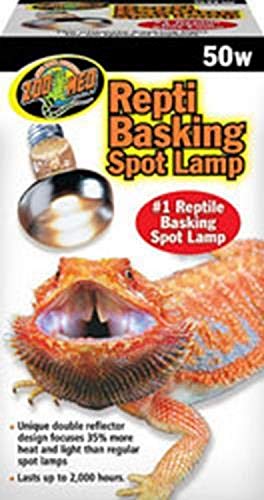
The Repti Basking Spot is intended to create a defined basking zone rather than diffuse enclosure heat. Its reflector concentrates output into a tighter beam, but whether that beam and wattage are appropriate depends on the species, enclosure and measured gradient.
It uses a standard screw fitting and provides heat only, with no UVB. Species that require UVB therefore need an appropriate separate UVB source.
The focused beam rewards careful positioning, so set the height and angle deliberately and confirm the basking and cool-zone temperatures with suitable thermometers. At 50W it still needs to be selected by measured enclosure temperatures rather than enclosure-size labels alone.
A focused basking bulb for setups where its measured temperature output fits the target. Species that require UVB need an appropriate UVB source as well.
Check price on Amazon →#5Budget pick
REPTI ZOO 100W Self-Ballasted Mercury Vapor Lamp
Best for: Enclosures where this lamp’s heat, UVB and mounting requirements match the species-specific targets
What we like
- Heat plus full-spectrum UVA/UVB from one budget bulb
- Self-ballasted with a standard E26 screw fitting
- Lower-output alternative to the 160W model
- Single-fixture all-in-one format
- Cuts the setup down to a single fixture
What we don't
- Lower-cost lamp still needs product-specific output verification
- Control compatibility must follow the manufacturer’s instructions
- 100W may be inappropriate for some enclosures

The 100W REPTI ZOO is a lower-output sibling to the 160W model. One self-ballasted bulb combines heat, UVA and UVB in a standard E26 format, reducing the setup to a single lamp where that arrangement is appropriate. The 100W rating is lower than the 160W sibling, but neither wattage should be mapped to an enclosure size or species without checking actual temperatures, UVB exposure and manufacturer distance limits.
UVB output changes over a lamp’s service life, so follow the exact manufacturer’s replacement guidance and verify exposure with an appropriate meter where needed rather than assuming visible light proves adequate UVB.
Self-ballasted mercury-vapor bulbs have specific control requirements, so follow the manufacturer’s instructions and verify enclosure temperatures independently rather than pairing the lamp with an incompatible controller. Even at 100W it can be inappropriate for some enclosures, so verify the measured result rather than treating it as a fits-everything option.
The budget all-in-one. A 100W heat-and-UVB format that still needs species-specific output, distance and temperature verification.
Check price on Amazon →Lighting is core husbandry, not decoration
It is tempting to treat reptile bulbs like a fish-tank light, something for looks. They are not. Reptiles depend on environmental heat for normal physiology, and many species also need appropriate UVB exposure. Lamp suitability therefore depends on species-specific husbandry targets, measured enclosure conditions and manufacturer instructions rather than on brightness alone.
Cover both jobs: heat and UVB
Heat and UVB are separate variables. For species that require UVB, the setup needs both an appropriate thermal gradient and the correct ultraviolet exposure; that can come from separate lamps or, where suitable, an all-in-one product. A combo pack is convenient, but it does not remove the need to verify species, distance and output. If the split is new to you, start with the heat and lighting basics.
Match the numbers to your animal and enclosure
Lamp output, mounting distance, enclosure geometry and species-specific targets all matter. Labels such as 5.0 or 10.0 and wattage alone do not determine suitability. Use a control method compatible with the chosen heat source and verify the warm/cool zones with independent thermometers; where useful, a UV meter can help verify ultraviolet exposure. Our thermostat guide explains the control formats and compatibility trade-offs. The rest of the enclosure is covered in our reptile guides.
Sources
- Merck Veterinary Manual — Management and Husbandry of Reptiles
- Merck Veterinary Manual — Nutrition in Reptiles
Frequently asked questions
Do all reptiles need UVB lighting?
UVB needs are species-specific. Merck notes that UVB is especially important for most diurnal lizards and chelonians, while other reptiles vary in how much exposure they require and how diet contributes to vitamin D. Check authoritative care guidance for the exact species rather than assuming one rule fits every reptile.
How often do I need to replace a UVB bulb?
Follow the manufacturer’s replacement interval for the exact lamp. UVB output can decline while visible light remains, and replacement schedules differ by lamp type, mounting and product. Record the installation date and use a suitable UV meter if you need to verify output.
What is the difference between a heat bulb and a UVB bulb?
A heat or basking lamp is selected primarily to create the required thermal gradient. A UVB lamp provides ultraviolet exposure, which is especially important for many diurnal lizards and chelonians. Whether an animal needs a separate UVB source, and how much exposure it needs, depends on the species and setup.
Can I use a mercury vapor bulb on a thermostat?
Many self-ballasted mercury-vapor lamps have specific restrictions on dimming, pulse or thermostat control. Follow the exact lamp manufacturer’s instructions and verify temperatures independently. If you cannot achieve the species-specific thermal target with a compatible and safe control method, choose a different heat/UVB arrangement rather than improvising around the lamp.